A well stocked pantry is one of the most underrated tools for eating better and spending less. When you have the right basics on hand, a healthy meal is always twenty minutes away, and the temptation to order takeout on a tired weeknight gets a lot weaker. The good news is that building a healthy pantry does not require expensive specialty products. Most of the best staples are also some of the cheapest foods in the store.
Here is how to stock a healthy pantry on a budget, what to buy first, and how to keep it organized so nothing goes to waste.
Start With What You Actually Cook
Before you buy anything, look at the meals you already make and enjoy. A pantry full of ingredients you never use is not healthy, it is just expensive clutter. Write down five or six go to meals and list the shelf stable ingredients they share. Those are your priorities.
Then check what you already have. Most kitchens hide a few forgotten cans, half used bags of pasta and spices bought for a single recipe. Use those up first and you will immediately free up space and money.
The Budget Healthy Pantry Staples
Grains and Starches
- Rolled oats: cheap, filling and useful for breakfast, baking and even savory dishes
- Brown rice or other whole grains: a base for bowls, stir fries and side dishes
- Whole wheat pasta: a quick dinner foundation that pairs with almost anything
- Potatoes and sweet potatoes: not strictly pantry items, but they keep well in a cool, dark place
Beans and Legumes
- Dried or canned beans: black beans, chickpeas and kidney beans add protein and fiber to soups, salads and tacos
- Lentils: cook quickly without soaking and work in soups, curries and stews
Dried beans are usually the cheapest option per serving, while canned beans save time. Many people keep both.
Canned and Jarred Goods
- Canned tomatoes and tomato paste: the starting point for sauces, soups and chili
- Canned fish: tuna, sardines or salmon for quick protein
- Low sodium stock or broth: for soups and cooking grains with more flavor
- Canned vegetables: corn and green beans are handy backups when fresh produce runs out
Healthy Fats and Flavor
- Olive oil or another cooking oil you like
- Peanut butter or another nut butter, ideally without added sugar
- Vinegar: a bottle of apple cider or red wine vinegar brightens dressings and sauces
- Basic spices: salt, black pepper, garlic powder, cumin, chili flakes, paprika and dried oregano cover a huge range of dishes
Freezer Helpers
Your freezer is an extension of your pantry. Frozen vegetables and fruit are picked and frozen at their peak, keep for months and are often cheaper than fresh, especially out of season. Frozen peas, spinach, mixed vegetables and berries are among the most useful items you can own.
How to Save Money While You Stock Up
- Build slowly. You do not need everything at once. Add two or three staples per shopping trip.
- Buy store brands. For basics like oats, rice, beans and canned tomatoes, store brands are usually just as good and noticeably cheaper.
- Compare unit prices. The price per ounce or per pound on the shelf label tells you which size is really the best deal.
- Buy in bulk only what you use often. Large bags of rice or oats make sense if you eat them weekly. Bulk spices you will not finish before they lose flavor do not.
- Stock up during sales. Shelf stable items keep, so buying extra when they are discounted is an easy win.
Keep Your Pantry Organized
An organized pantry saves money because you can see what you have and use it before it expires.
- Group similar items together: grains in one place, cans in another, baking goods in a third.
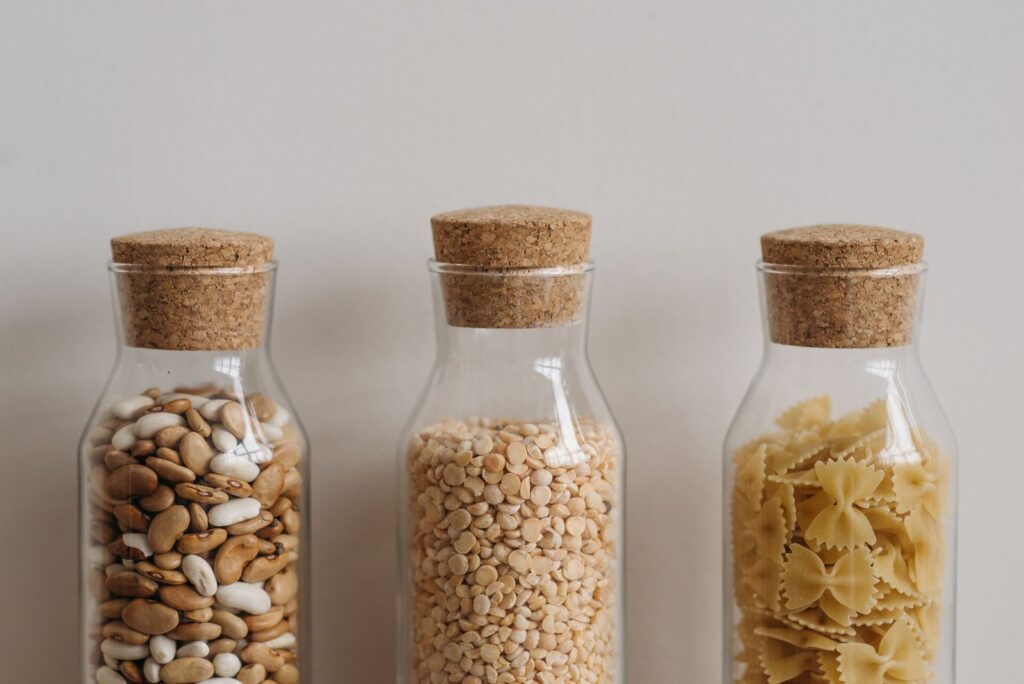
- Use clear containers for things like oats, rice and lentils so you can see when you are running low.
- Put older items in front. When you bring new groceries home, move older packages forward so they get used first.
- Keep a running list on your phone or the fridge and add items as soon as they run out.
Simple Meals From a Well Stocked Pantry
Once your pantry is set up, quick and healthy meals become almost automatic. A few examples:
- Lentil soup with canned tomatoes, stock, spices and frozen spinach
- Black bean tacos with rice, salsa and whatever vegetables are on hand
- Whole wheat pasta with tomato sauce, canned tuna and frozen peas
- Overnight oats with frozen berries and a spoonful of peanut butter
- Chickpea curry with canned tomatoes, spices and rice
Add a few fresh ingredients each week, such as onions, garlic, eggs, leafy greens or seasonal fruit, and your options multiply.
Easy Swaps That Save Money
A few simple swaps can make your pantry both healthier and cheaper at the same time:
- Plain oats instead of flavored instant packets. Add your own fruit and a little honey for a fraction of the price.
- Dried beans instead of some canned ones. Cook a big batch on the weekend and freeze portions for quick meals.
- Whole spices and blends you mix yourself instead of pricey seasoning packets, which often contain a lot of salt.
- Frozen berries instead of fresh out of season. They work perfectly in oatmeal, yogurt and smoothies.
- Homemade dressings from oil, vinegar, mustard and herbs instead of bottled versions.
Conclusion
Stocking a healthy pantry on a budget comes down to buying simple, versatile staples, building your supply gradually and keeping things organized so nothing is wasted. Oats, beans, lentils, whole grains, canned tomatoes, frozen vegetables and a handful of spices can support dozens of nourishing meals for very little money. Get the basics in place, and eating well on a busy week becomes the easy choice rather than the hard one.